A decision to use a bolus, rather than other supplements, has improved scanning percentages, combatted an iodine deficiency and saved time for couple Sam Williams and Rachel Cooper. XXX finds out what brought about the change and how the flock has benefited.
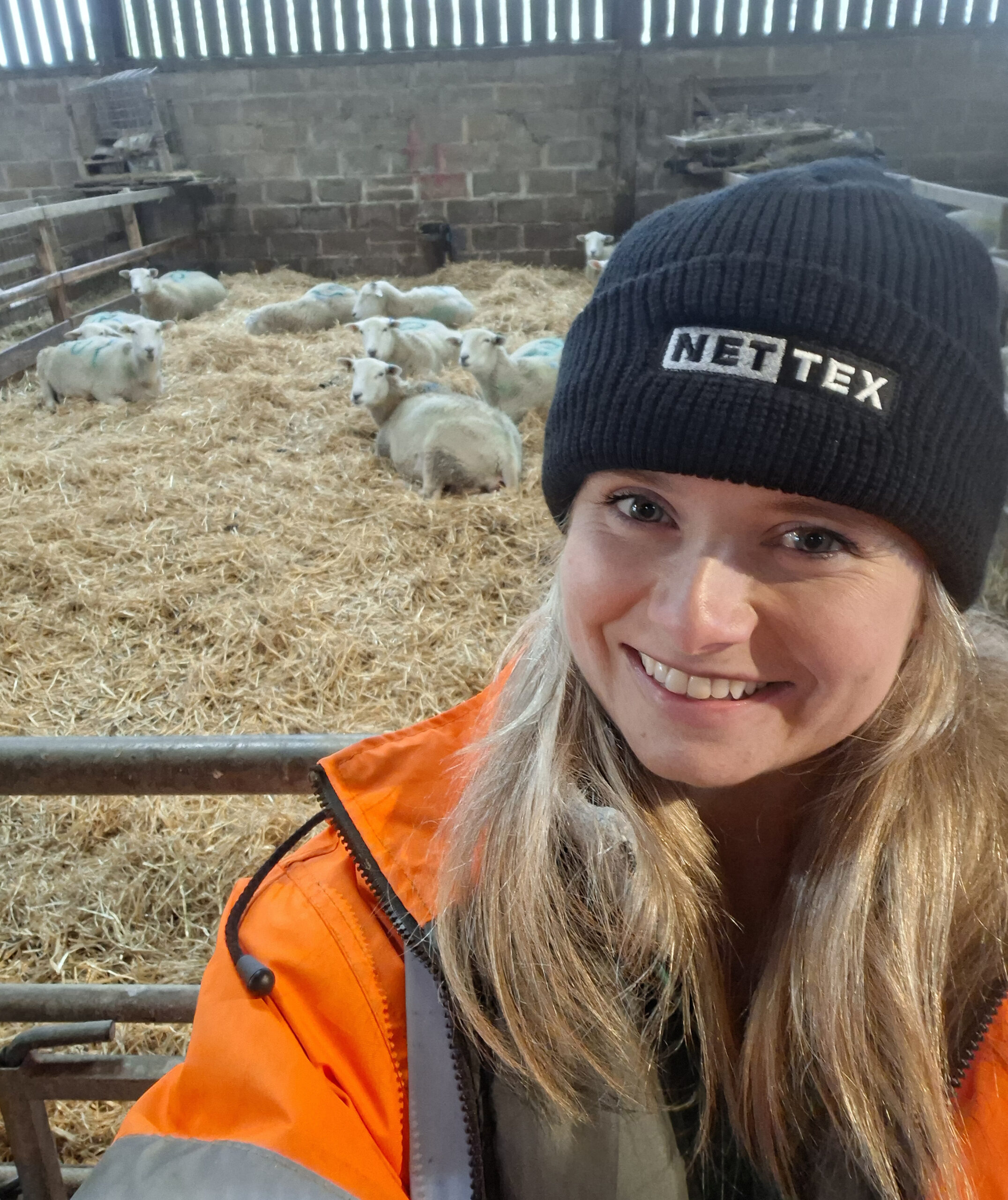
Mr Williams is the fourth generation at Highlands Farm, in Shropshire, and is part of a family partnership that makes up GF Williams and Sons. The family manages a flock of 1400 Aberfield mule ewes along with 500 acres of arable land and 400 acres of grazing pasture.
“We saw our scanning percentages drop in 2020, and the subsequent years reduced further, so we felt the need to act. We moved to the Endurabol bolus in 2023 and have seen the percentages bounce back significantly,” says Mr Williams.
Scanning percentages of yearlings dropped incrementally from 166 in 2020 to a low of 136 in 2023. Introducing the bolus was fundamental to bringing about a rise which saw scans of yearlings in 2024 recover to 176.
“We are now aiming to get the yearlings up to 180 by concentrating on body condition ahead of tupping, and working with our vets to keep a close eye on diseases such as Johnes, which we plan to test for specifically this year,” he says.
He chose the bolus to improve the consistency and the longevity of supplementation, and also suggests that, with the bolus, the administration is more manageable and offers much needed iodine.
“It covers them for 180 days and provides high levels of iodine, selenium, cobalt, zinc and manganese. We were particularly interested in the iodine because we have established that there is a deficiency in the flock. The bolus is also good for delivering vitamins A, D3 and E,” he says.
The flock is finished on a homegrown concentrate that includes barley and oats mixed with a bought-in protein supplement. Finishing more intensely suits his mixed system, where the goal is to see the majority of lambs leave the farm by the end of July.
“We need to get the bulk of lambs off the farm so we can manage harvest. Most of the lambs are sold deadweight to ABP locally, but we also use our local livestock markets. All the lambs are sold by October so we can concentrate on ewe condition ahead of tupping,” he says.
The farm is introducing some herbal leys to improve the overall diet of the flock, following blood tests that showed iodine levels to be low.
“We know we are in an area where iodine deficiencies are common so we are hopeful that the herbal leys will go some way to helping this. However, having experienced how the bolus has positively affected the flock, we are confident that ewe condition and overall flock health is significantly improved,” he says.
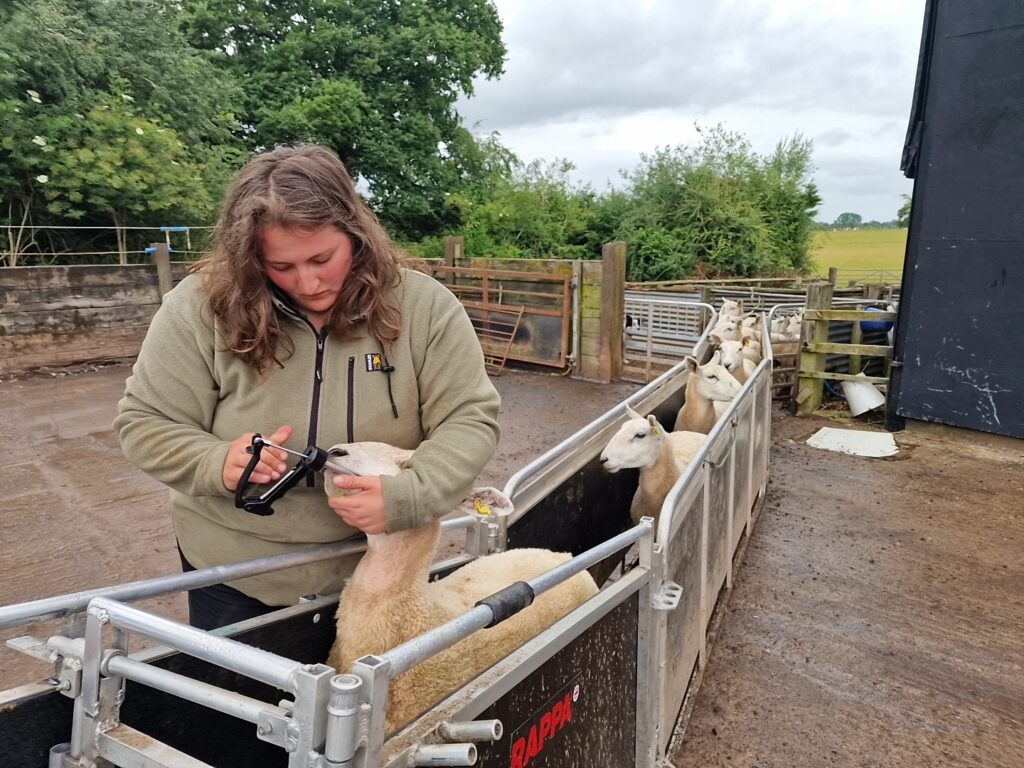
He concedes that the bolus was not a straightforward switch and developing a method, and the skills to administer it, was a challenge at the start.
“First time round it was a bit tricky. We learned that it helps to have the ewe facing upwards because it is easier to lean the head back and applicator positioned. This year it has been easy, and we are up to about 170 ewes in two hours,” he says.
The bolus has led to fewer vet visits and blood tests which he believes has lowered stress levels and is saving the farm money.
“We are also better placed to look for disease issues and so can concentrate our time with the vet on this because the bolus is providing the vitamins and minerals the flock needs,” he adds.
The flock was largely made up of a Cheviot mule put to a Texel ram. However, a shift to the Aberfield mule and a Suffolk or Texel ram has produced a more commercially viable lamb.
“We found we were getting more genetic issues, such as lameness and in-turned eyelids, so we moved to performance recorded rams which has enabled us to produce a carcass that will grade well in our faster finishing system,” he says.
He further suggests that a move to not castrating or tailing ram lambs has helped with joint ill and that ram lambs also reach the grade weight required faster.
“We also find them easier to handle with the ewe lambs,” he adds.
Ewes go to the tup in October and lambing starts in March, so there is a focus on ewe condition from early summer, with a bolus being administered in July, to ensure the flock is as strong as possible going in to tupping.
“The bolus has taken away the sense of doubt we have had in the past and helped us to concentrate on other aspects of flock health. We are now confident we will see percentages rise above 180, which will make a big difference to where we were a few years ago,” he concludes.