Overcoming problems resulting from mineral deficiencies in soils and forage has been a vital step for David Hillman as he works hard to build up his own suckler cow and beef finishing enterprise.
With little control over the rented ground that he uses for grazing and forage production, the solution is to supplement his cattle directly, to ensure they receive all the essential trace elements and minerals that they require, when most needed.
For his suckler cows and bulls, David finds slow-release boluses to be most effective, and for the past three years has chosen Nettex’s EnduraBol range for it’s consistent and reliable delivery of all the vital micronutrients.
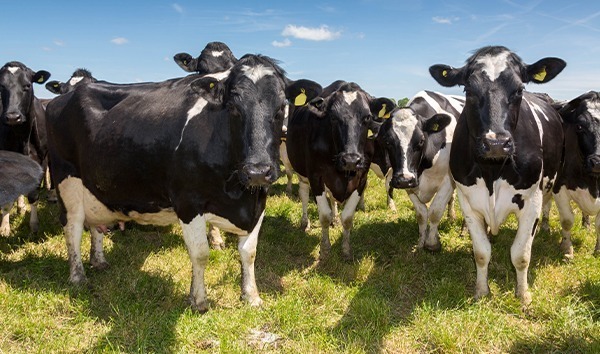
Based near Radbourne, in north Wiltshire, David has built up a herd of 60 Limousin and British Blue cows, including pure and crossbreds, producing top quality finished beef cattle sold through Cirencester market. He relies entirely on rented facilities, which includes SSSI-designated permanent pasture for grazing and some other land where he provides a break crop solution within an arable rotation by growing grass and maize for his winter-fed silage.
In addition to building up and managing his own herd, David also works as a relief stockman across a number of farms in the area, including some work as an artificial inseminator. It was his broader experience, and his expertise in breeding and fertility, that first highlighted issues he was having in his own cattle.
“I’ve seen a number of different problems over the years that have pointed to mineral deficiencies, including low conception rates in the cows, and poor vigour in newborn calves,” recalls David.
“I know from soil sampling that the problems are complex and largely out of my control, as I’m renting land and grazing low input permanent pastures, so effective supplementation of the cattle is essential.”
In order to improve his own herd as quickly and efficiently as possible, David has been using embryo transfer as well as artificial insemination to gain access to premium genetics. With relatively high investment in straws and embryos, anything less than optimum fertility has been a red flag, not to mention a source of great frustration.
“It was clear to me we had a problem when I was struggling to get my own cows in calf and yet conception rates across a number of other herds where I was doing the AI were all good,” recalls David. “This prompted me to have blood tests done in the cows and it was clear from the results that there was a trace element deficiency.
“Given the way we feed the cows, the most effective way to supplement was with boluses, and Nettex’s Endurabol Range for cattle was the obvious choice given that it consistently delivers effective levels of all the vital trace elements.”
“I now routinely use EnduraBol High Iodine version of this bolus, giving all the cows one in December, to cover the period up to spring calving, and a second one in May, just before the breeding season. I also use the EnduraBol Biotin bolus in my stock bull.”
The EnduraBol boluses provide a steady and consistent release of the six trace elements most commonly known to be deficient or sub-optimal in ruminant diets, these being selenium, cobalt, zinc, manganese, iodine and copper. In addition, the boluses supply optimal levels of vitamins A, D3 and E. These micronutrients work together to prevent the adverse effects of deficiencies.
David also uses magnesium flakes, added to water troughs daily, to counter high calcium levels in the forage, and the overall impact of effective supplementation has been widespread.
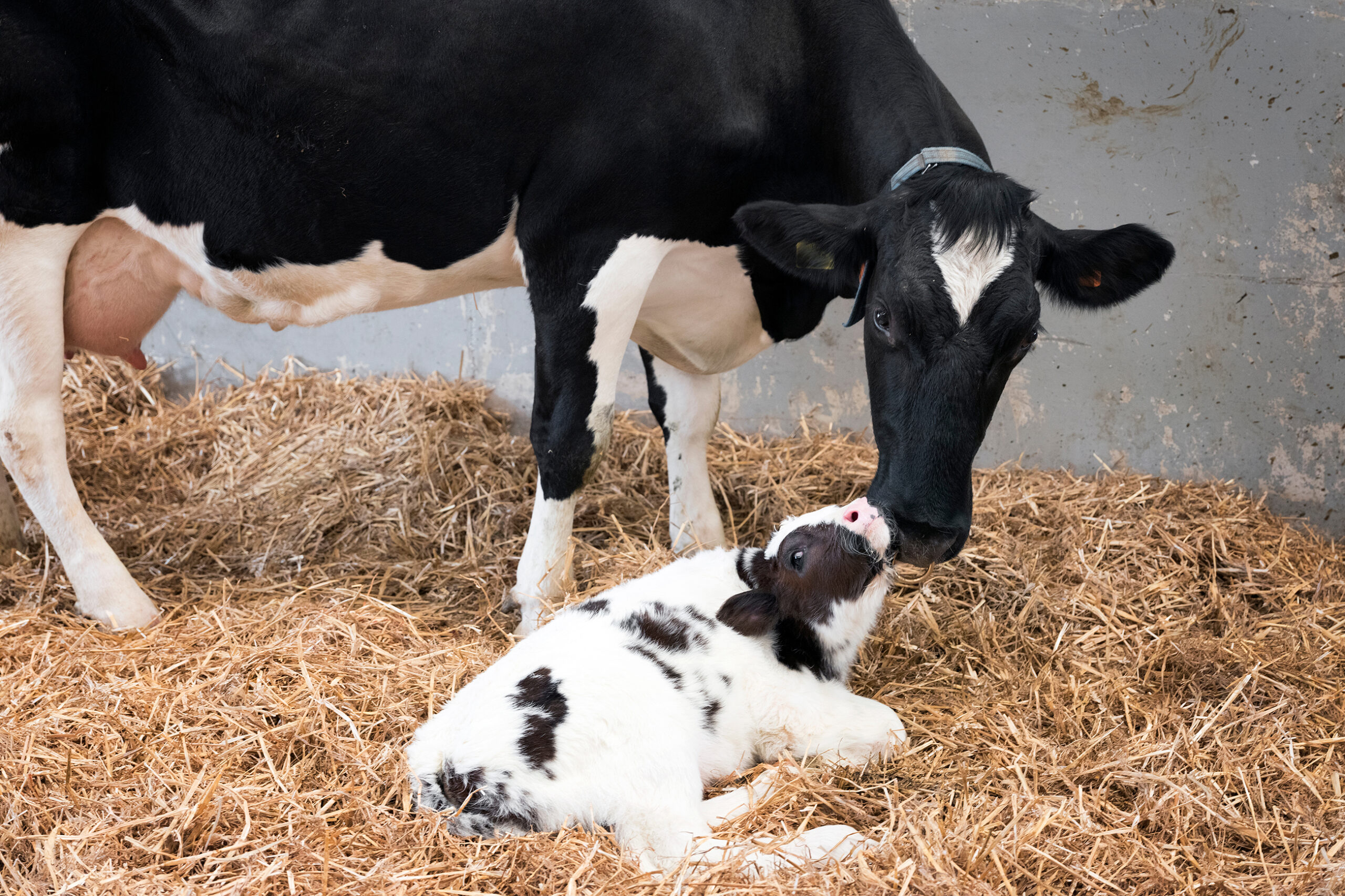
“I’m seeing stronger heats in the cows and conception rates as they should be,” adds David. “Calves are now all born full of vigour, frolicking at a few hours old, and the cattle all have slick and shiny coats, and the right colour for the breed. There’s no doubt in my mind that the routine bolusing is the best and most cost-effective way to guard against deficiencies.”
Calves are weaned off the cows once the cattle have been settled into winter housing. They will have been on a creep-fed ration of oats and concentrates from the summer with intakes increasing as grazing quality tails off. Once the calves are weaned, David works out his own TMR, using forage analyses as the basis, to keep the growing cattle on a high plane of nutrition to ensure they reach optimum finishing weight and condition at around 13 – 15 months.