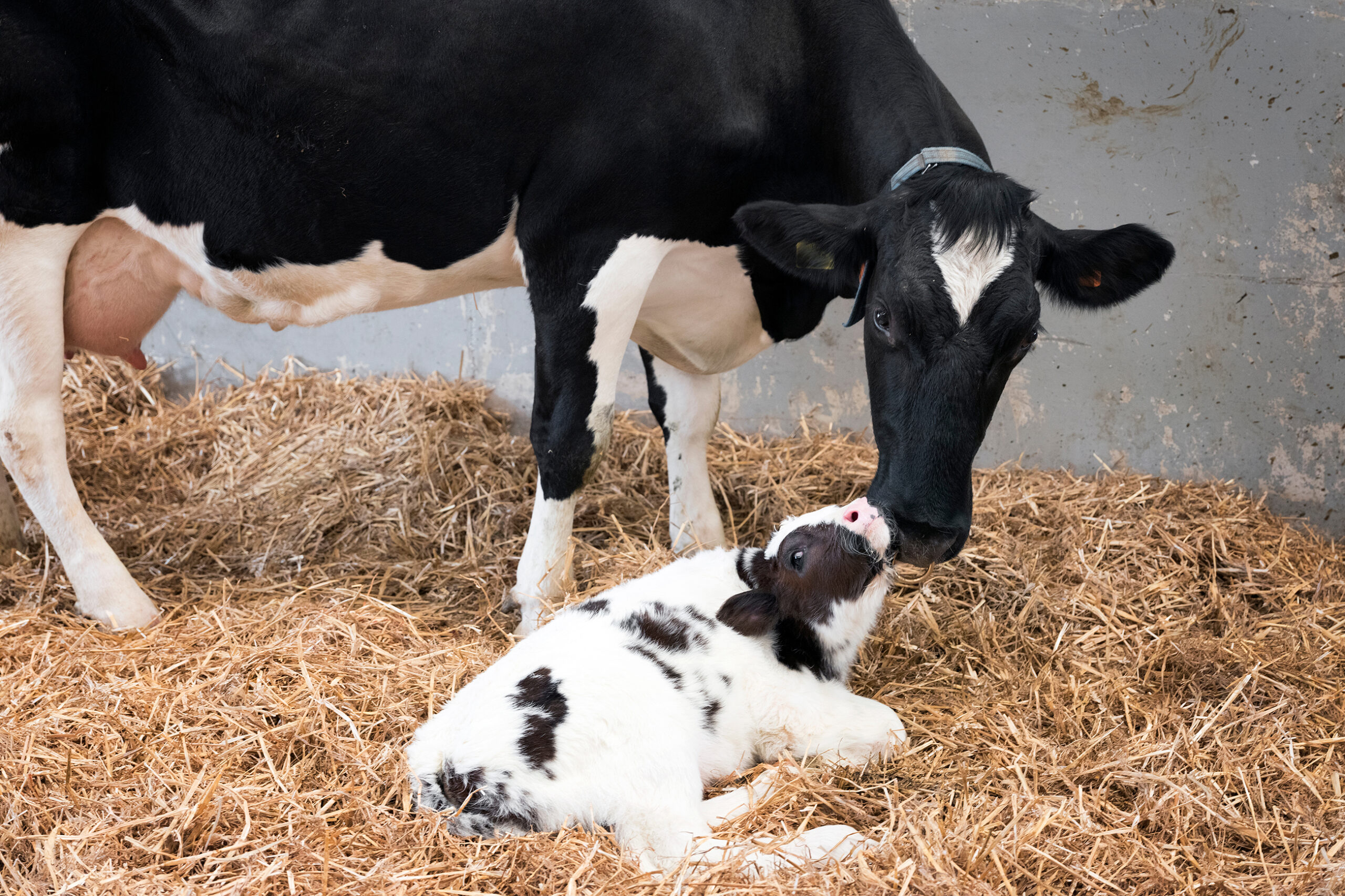
Calf Kick Start gives energy boost to newborn calves
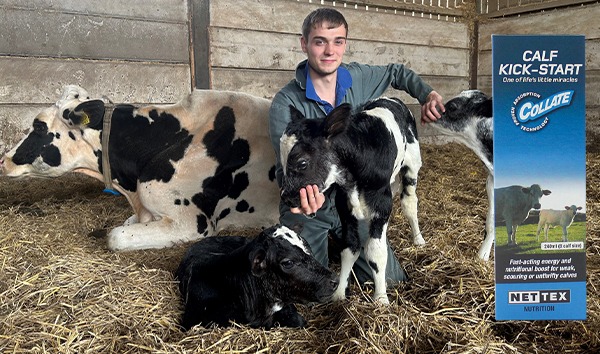
With 11 years of calf rearing experience under his belt, young farmer Josh Cox prioritises those early hours of life for newborn calves to set them up for a lifetime of success.
Working as a calf rearer for Ladywood Farm near Atherstone in the Midlands, Josh helps calve down the farm’s 150 Holsteins and 20 Ayrshires year-round. The farm typically retains 45 heifer calves for replacements, which Josh oversees.
Josh also rears the farm’s beef calves, which are crosses from British blue and Angus. Recently, he has set up his own calf rearing system, buying crossbred beef calves from local farms and auction marts.
Giving calves a kick start
As a result of a combination of genetics and nutrition, Ladywood Farm has a high rate of twins born each year, with a 10 percent average.
“While it isn’t uncommon for us to see 17 sets of twins born each year, most farms will only see one or two at the most,” he says. “We had a set of triplets born recently, which is extremely rare.”
This has created a unique challenge for the farm in getting calves off to a strong start, with birth weights and vigour typically lagging due to sharing nutrients in utero.
To overcome this, multiples are fed Calf Kick Start from Nettex. A strong source of energy and nutrients, Calf Kick Start is ideal for calves from birth to three months old that are struggling to stand post birth, or that are fatigued, sick or scouring.
Easy to administer, Calf Kick Start rapidly delivers essential vitamins, minerals and energy sources required to support blood glucose levels, immune functioning, growth and development.
“There isn’t another product available that matches it,” says Josh. “After receiving it, a calf will quickly go from weak and low energy to running around the pen. It is great for giving them that extra kick of energy they need to get up and going.”
Rearing for success
This boost is essential to the farm’s long-term success in both its replacement heifers and beef calves.
From birth, the aim is to have heifer calves developed to be calved down by two years of age. From four weeks old, they are moved on to a once a day feeding CMR system and then weaned at eight to nine weeks old, with a target of consuming 1.5kg of cake per day by weaning.
“The calves are reared with rumen development in mind, and we monitor the heifers weights and body condition for breeding, with our goal of having their first calf on the ground by two years of age,” says Josh. “Anything that goes past two years is not only costing money to maintain but also harder to keep in the right body condition.”
In both the farm’s and his own beef calves, the goal is for them to efficiently utilise their feed to maximise growth rates.
“I’ve found it best to start them on a pellet feed and then transition to an ad-lib cereal blend with straw. This helps promote rumen development and boosts growth rates with little and often feeding,” says Josh.
Getting calves off to a strong start pays in the long run
From his experience, the most important thing to get right for the short and long-term health and performance of calves is to make sure they get a strong start to life. Whilst this starts with a priority on getting the right amount of high quality colostrum in as quickly as possible after birth, Calf Kick Start has earned its permanent place in the calving toolbox.
“Calf Kick Start is such a simple solution to give calves that extra boost of energy and to set them up for a lifetime of success,” concludes Josh.