Watery Mouth. Control starts now!
An outbreak of Watery Mouth in lambs can have a severe impact on a flock at lambing time. Mortality can be significant, and the cost and time spent treating and supporting affected animals can add up. But it can also take its toll on the lambing team, witnessing this season’s newborn lambs succumb so shortly after birth.
The typical signs are seen in the first days of life and include drooling, constipation and a distended abdomen. Affected lambs are lethargic with a high temperature and can rapidly deteriorate and die.
In principle, watery mouth is caused by infection with E. coli bacteria which rapidly multiply in the intestine, releasing toxins. However considering it as a straightforward “infection” can lead to inadequate control measures and even inappropriate use of antibiotics.
Treating affected lambs might require antibiotics, under veterinary guidance to ensure their use is justified and effective. However supportive care is just as, if not more, important for survival of affected lambs. Oral electrolyte & glucose therapy to prevent dehydration and provide energy can be lifesaving. In some cases enemas to help expulsion of meconium may also be required. As cases occur soon after lambing and progress quickly it can be advisable to discuss treatment requirements with your veterinary surgeon in advance. This allows a treatment protocol to be in place, so all the lambing team know how to spot signs and start therapy as soon as possible.
As with many conditions, treatment should be seen as the last resort because there are many preventative measures that can be put in place to reduce outbreaks in the first place. The starting point is good ewe nutrition and a correct body score in the run up to lambing. This promotes optimal birth weights and adequate colostrum, both of which are associated with lower incidence of disease and better survival rates.
The importance of colostrum in controlling to watery mouth cannot be overstated. It’s well recognised that all lambs need a suitable quantity of high-quality colostrum as soon as possible after birth. However in a busy lambing shed it’s not always easy to put theory into practice. That’s where preparation can help, ensuring suitable equipment for testing and feeding colostrum is ready at hand. If several people are to be involved with lamb care, then having an agreed “Colostrum Protocol” written out and available can be advantageous. This means everyone knows how much a “suitable quantity” is and when and how often it should be given.
It goes without saying that good hygiene is another key factor in preventing and controlling watery mouth. E. coli can build up in the environment in areas such as bedding and soiled fleeces. As time passes, the challenge to lambs will increase and is obviously a much higher risk in indoor situations. Ideally soiled bedding should be removed after each lambing, the pen disinfected, and fresh bedding laid. This can be challenging, especially in poor weather or at the peak of lambing activity but should be seen as a priority, with all the lambing team aware of the importance. In the event of an outbreak of watery mouth then, if possible, ewes still to lamb should be moved to alternative accommodation and good biosecurity measures put in place between the two areas.
Historically oral antibiotics have been used as a preventative measure for watery mouth. Given the important need to reduce overall antibiotic usage in farming, the reliance on their “blanket” use in the absence of, or as a substitute for, other control measures is inappropriate. These products could still have a place, for example for high-risk lambs in the face of an outbreak, but this should only be considered after detailed discussions with your vet to ensure the use is appropriate, and alongside other suitable control measures.
The management and control of watery mouth starts long before the lambs are born. Ensuring suitable ewe nutrition during pregnancy is the first step to producing strong healthy lambs that receive a good supply of high-quality colostrum. This will best prepare them to face all the challenges in their first days of life.
Lamb Shield from Nettex is a complementary feed to support newborn lambs’ healthy gut development. Formulated to supply essential energy & protein, it also contains Celmanax, a fermented yeast culture, consisting of biologically active RFC (refined functional carbohydrates). Celmanax provides a whole host of benefits including supporting the growth of beneficial bacteria. Lamb Shield helps give them the best start and supports them through the challenging first days of life.
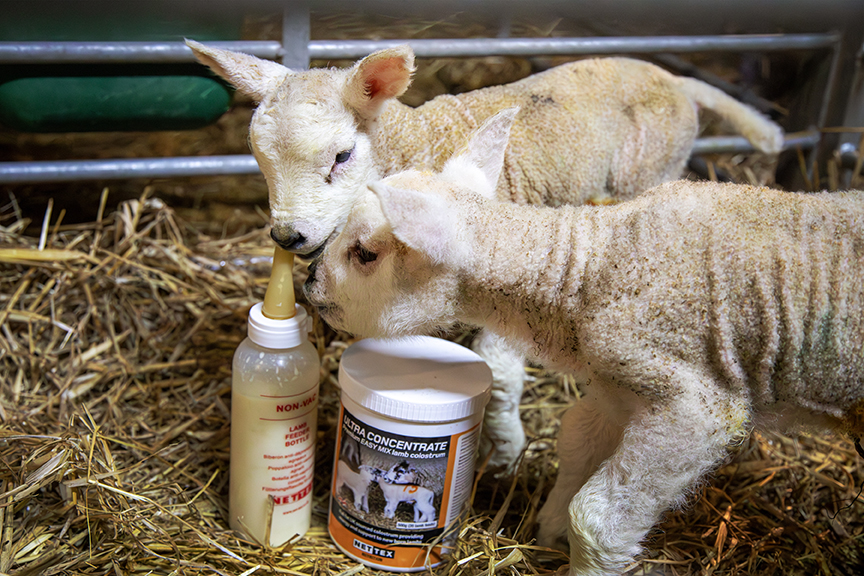
Ultra Concentrate Colostrum from Nettex is a high quality, easy-mix first day colostrum providing energy and support to weak and small lambs. Ultra Concentrate mimics the ewe’s own colostrum for use when no or insufficient maternal colostrum is available. All Nettex colostrums are made from natural, full fat colostrum sourced exclusively from TB & EBL free UK farms.