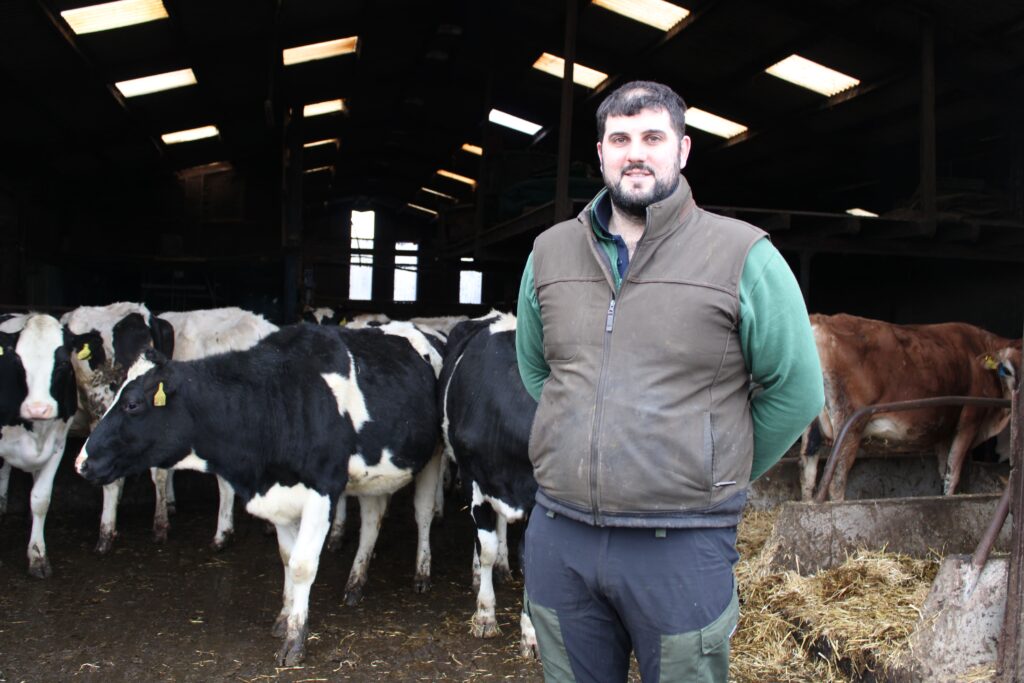
Faced with increasing cases of milk fever, Lancashire-based producer Tom Parkinson began using a post-calving drink to ‘refresh’ cows, encourage food intake and increase milk flow.
A tenant with a mixed herd of Holstein and Jersey cows, Mr Parkinson is growing the herd and looking to buy a farm of his own.
“We have 65 followers, and we are reaching capacity. We have built the herd over seven years and milk through an old Westfalia herringbone parlour. In recent years milk fever has become an issue with up to six cases a year, and cows have not fed or milked well after calving, which has impacted yields,” he says.
To address the issue, he experimented with post calving drinks and has settled on Fresh Calver from Nettex. He suggests the palatability of the drink has proved better than previous alternatives and that cows drink the full amount.
“We’ve found it makes the cow look for food. It seems to stimulate her to eat, and this is half the challenge. We haven’t had any cases of milk fever since using it and cases of LDAs or cows that calved in a bit flat have also become rare. It flips a switch in the cow and, once she is up and eating, we tend to see milk flow improve too.”
The drink provides electrolytes that replenish those lost during calving. This helps to rehydrate the cow, which also helps to stimulate her desire to eat. Glucose in the drink delivers fermentable carbohydrate which helps restore energy, and calcium encourages the cow to mobilise after calving.
Following a challenging forage-growing year in 2024, Mr Parkinson has looked to provide supplements both ahead of and after calving. This includes a drench for dry cows and the use of the drink immediately after calving.
“We graze and have tried to improve our silage provision, but 2024 was not good for growing grass and we noticed body condition and milk yield were affected,” he says.
He suggests grass was high in protein but lacked metabolisable energy (ME). This has caused the herd’s yields to drop sooner towards the end of the lactation.
“They have put weight on but when we saw milk yields falling we began feeding Brayton Gold, a moist feed which is designed to improve intakes, drive yield and extend forage,” he says.
He sees body condition going into calving as paramount to how well the cow will recover and subsequently milk. However, the cow’s recovery and susceptibility to diseases and conditions such as milk fever were also of concern.
“Post calving, the use of the drink helped to provide Vitamin E and selenium, which we see as a good way to support the cow’s immune response and disease resistance. We have also tried using other methods to protect against ketosis,” he adds.
Mr Parkinson uses a mineral drench when cows are dried off and has experimented with a ketosis reducing bolus, but the product was suspended for use in the UK in 2024.
“It was expensive and difficult to administer. Our aim was to increase yield and conception rates but this was not realised after trialling the bolus, so we looked to other options. Whilst the post calving drink is not a clinical way to deal with ketosis, we have found it helps cows to eat and the additional energy sees them ready to milk more quickly,” he says.
The mixed herd average 8,000 litres per cow per year, with the Holstiens providing higher yields and the Jerseys higher butter fat milk.
“Our butter fats average 4.9%, which makes the milk good for our buyer who uses it for yoghurt production. The Jerseys provide milk with fats of 5.88% whilst the Holsteins are lower at 4.36%,” he explains.
Calving intervals also differ in the herd. The Jerseys have a calving interval of 367 days whilst the Holsteins have an interval of 401 days.
“The Jerseys are less challenging at calving and generally easier to manage. We find Fresh Calver is needed more by the Holsteins,” he says.
The herd has a low somatic cell count of 65,000 and udder health is generally good. This helped to remove any doubt that freshly calved cows were giving reduced yields due to mastitis issues.
“While we see good production levels, there was also a drop off in yields after calving and some cows would take five milkings before reaching full flow. Using Fresh Calver has remedied this and allowed us to look at other areas where we can improve cow health and productivity.”
Farm Facts
- Quakers Farm
- 130 acres
- 70 cows in milk with 65 followers
- All year-round calving
- 8,000 litres per cow per year milk average
- 9% butter fat
- 6% protein
- SCC 65,000
N.B. Tom Parkinson set up a YouTube channel, @TheBIGlittleFarmer, to share his farming experience and has grown almost 3,000 followers. He aims to educate those who engage about the daily pressures of dairy farming and how he and his family are using their story to try and show life on a dairy farm as it happens.