Switching to a paste has helped improve marking a pedigree flock of Kerry Hill sheep and enabled more accurate planning for lambing.
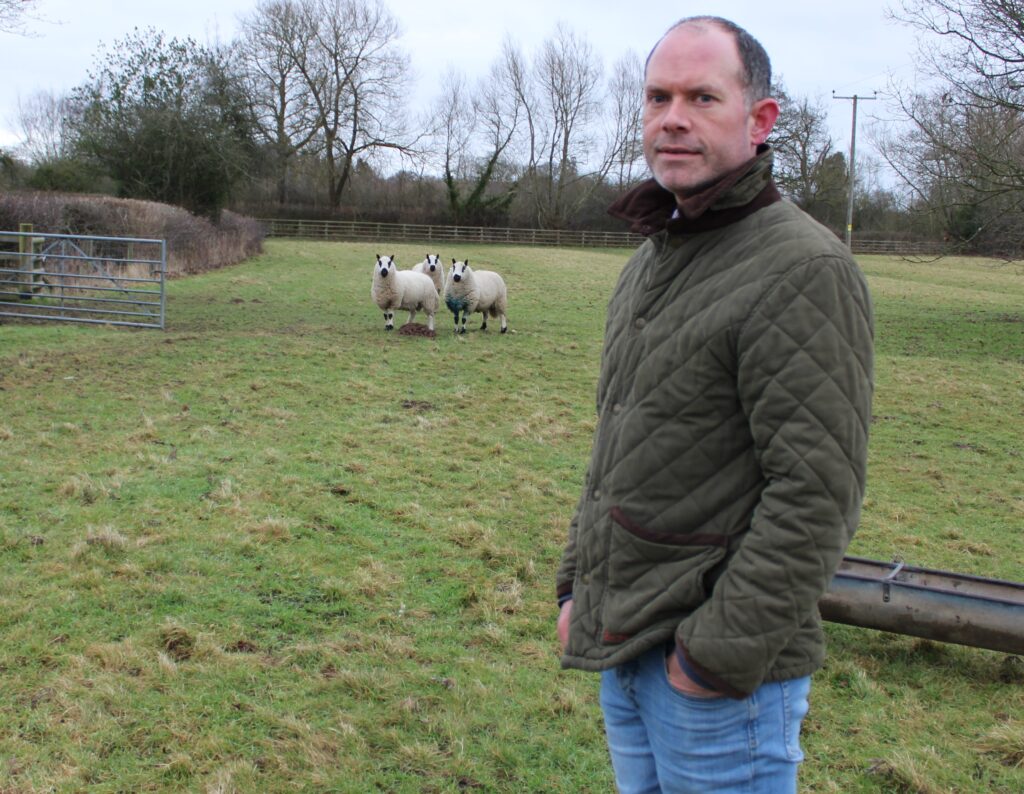
Downwood Farm, in Herefordshire, breeds and shows Kerry Hill and Devon Closewool sheep. Farmer Jim Rowe lambs early to make sure lambs are a good size and ready for showing in the summer. Working to a tight schedule he has found using a lambing paste more effective for his flock.
“We need to know exactly when a ewe has been tupped so we can forward plan when each ewe needs to be housed for lambing,” he says.
He has moved away from using a harness with crayon blocks favouring the marking paste because it easier to use and longer lasting.
“I tried the powder that is mixed with oil but found it could dry out and not leave a strong enough mark. For me the marker needs to be good and vivid so I switched to Marksman paste which has a strong colour and works well whether applied to a wet or dry fleece,” he says.
He suggests that using a harness is not as comfortable for the rams and can often require adjustment if the ram loses weight during tupping.
“We want our rams to be at their best and most of all we want them to be comfortable. We have found that using a harness is not as good for ram lambs either,” he adds.
The paste is also long lasting and has remained visible for up to eight weeks. Mr Rowe still chooses to refresh the paste every two to three weeks, but this has saved him time when compared to crayons or powder mixed with oil.
“We have to bring the whole flock in to refresh whatever marker we are using. It is very hard to get to the tup if we don’t. The paste lasts much longer so we have saved a lot of time during tupping by not having to bring the flock in so many times,” he says.
He first heard about the paste on Instagram, where he saw others with similar flocks reporting time and cost savings.
“I’m always on the lookout for new ways to improve. We have a relatively small flock of pedigree sheep that are shown at many of the major shows including the Royal Welsh and the Royal Three Counties Show. We know the dates that the flock need to be at their best by, which is why monitoring tupping more accurately is a top priority,” he says.
Having used the paste he suggests there are a couple of practical considerations that will help others who want to make the switch.
“Use long gloves. It sounds obvious, but the paste is long lasting and very hard to get off skin. I would also suggest not using the orange paste. There is black, blue, green and red to choose from, but I found the orange was harder to make out because it blends with the fleece of my flock.”
Mr Rowe established his flock in 2000. He has since won many awards and broken records for the sale of Kerry Hill sheep. Almost 25 years on he is still dedicated to the breed and is always on the hunt for new ways to make improvements.
“It may seem like a small thing, but getting marking right is crucial to my planning and it is really helpful to have manufacturers like Nettex looking for ways to improve farming efficiencies by developing new products,” he concludes.